The Album Before the Arrest
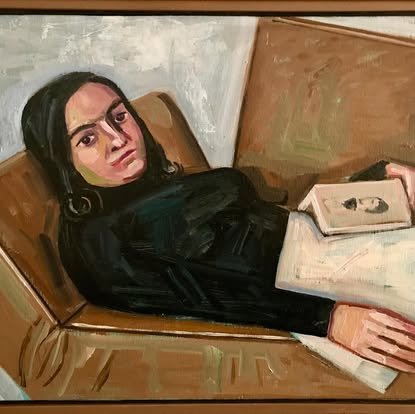
February 2022.
Paris had just exhaled.
The lockdown lifted like a heavy curtain and suddenly cafés were alive again. Sidewalks. Laughter. Faces. Skin. I met her in an art supply store in the 11th arrondissement. I struck up a conversation about photography. She was a journalist and wrote about it. I walked away with her email address. A few days later we met for a drink.
We were both starving.
Starving for touch. For conversation. For presence. For the simple human electricity that had been rationed for months.
The love affair ignited quickly. It was physical, emotional, intellectual. We spent as much time together as possible. It felt inevitable. It felt destined. It felt like oxygen.
It had never been easier for me to write songs.
I wrote the entire album O’Paris Town inside that fever. The city and this woman became fused in my mind. When I think of those songs now, I cannot separate her from the river light along the Seine where we loved to walk, the way the stone embankments held the afternoon sun, the slow green current moving past like time itself.
She had a backstory.
Her first real love had been an older man in Montpellier. She was 22. When she left for Paris, he began affairs. One of them with a close friend of hers. When she discovered the truth, her heart shattered. She made a vow never to fall in love again.
Three months into our relationship she left a voice message I saved for a long time.
“I love you, Rick Beerhorst.”
I knew it was important.
What I did not understand was how that love would begin to close in on me.
She had also cut both of her parents out of her life. Completely. Sometimes people do this to survive. But it meant that this relationship carried enormous weight. It was not just romance. It was sanctuary. It was identity. It was proof that she could love again without being destroyed.
So she guarded it with vigilance.
At first, that vigilance felt like devotion.
Gradually, it felt like surveillance.
There was jealousy I had never experienced before. Questions. Interpretations. Suspicion in places where there was nothing to find.
It all came to a head one night in early February.
She saw that I had accepted a Facebook friend request from a young woman. The daughter of the last woman I had dated in Germany before moving to Paris. Nothing romantic. No secret communication. Just a digital connection.
She was instantly incensed.
There was no explanation that could calm her. The argument escalated rapidly. She took my apartment keys and told me that if I left, she would begin destroying my paintings.
I was now a hostage in my own home.
For three days.
Sunday night she was sitting on my bed, propped up by pillows, working on an article in her panties and a T-shirt. My keys lay beside her thigh. I saw them.
I made a move.
She grabbed my hand and a struggle followed. I managed to retrieve the keys using a restraint hold I had learned years earlier while working at a mental hospital. It was controlled, not violent, but it frightened her.
Within minutes she began packing.
I felt relief.
That is the truth.
I called her an Uber. I watched from the stairwell to make sure she got in safely.
The next afternoon my phone rang.
The nearby police station.
They said they had a few questions. I said I would be glad to answer them. They suggested it would be better if I came down to the station.
I walked there voluntarily.
As soon as I arrived, I was arrested.
They took my belt and my shoelaces.
I sat on a bench next to two young Black women, one in complete hysterics, waiting to be assigned a cell.