This is not nostalgia. It’s ignition.
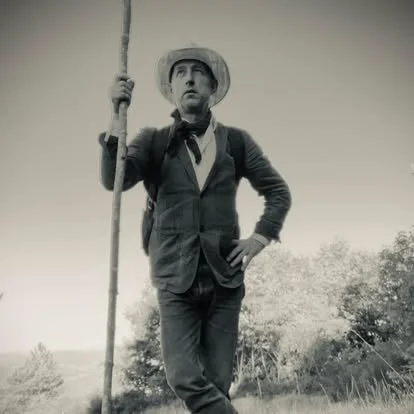
The Artist Pilgrim in Tuscany
Over the past several days, I’ve been pulling my images, my work, my story out of digital corners — Facebook, Flickr, Instagram — and bringing them home to Pinterest.
Pinterest has become my loom. Each image a thread. Each thread a part of a story that has been waiting to be seen whole.
As I gather them, something stirs.
A sleeping part of me sits up.
This is what it means to re-member:
to wake from the enchanted sleep of forgetfulness
and feel the pulse of our own myth again.
This isn’t just my awakening.
My re-membering is yours, too.
It belongs to all of us who have forgotten our own magnificence,
who have allowed the misty amnesia of time to dull our edges.
This letter is the kiss —
the moment the spell breaks
and the body of your story wakes up again.
Not long ago, teenagers spent their afternoons building treehouses or Lego starships.
Now, many of them build worlds in cyberspace on borrowed laptops — transforming scattered bits of code and vision into new abundance.
That image has been echoing in me lately. Because in my own way, I’m doing something similar right now:
spreading out the puzzle pieces of my pilgrimage on Pinterest like a map on a coffee table.
And as the pieces come together, so does the narrative arc of my life.
Once the story is visible, the future stops hovering at the horizon.
It starts humming like a finely tuned engine, ready to run.
If this sparked off something that is awakening in you perhaps we should work together. If that sound good go over hear
The Dusty Lego Bin
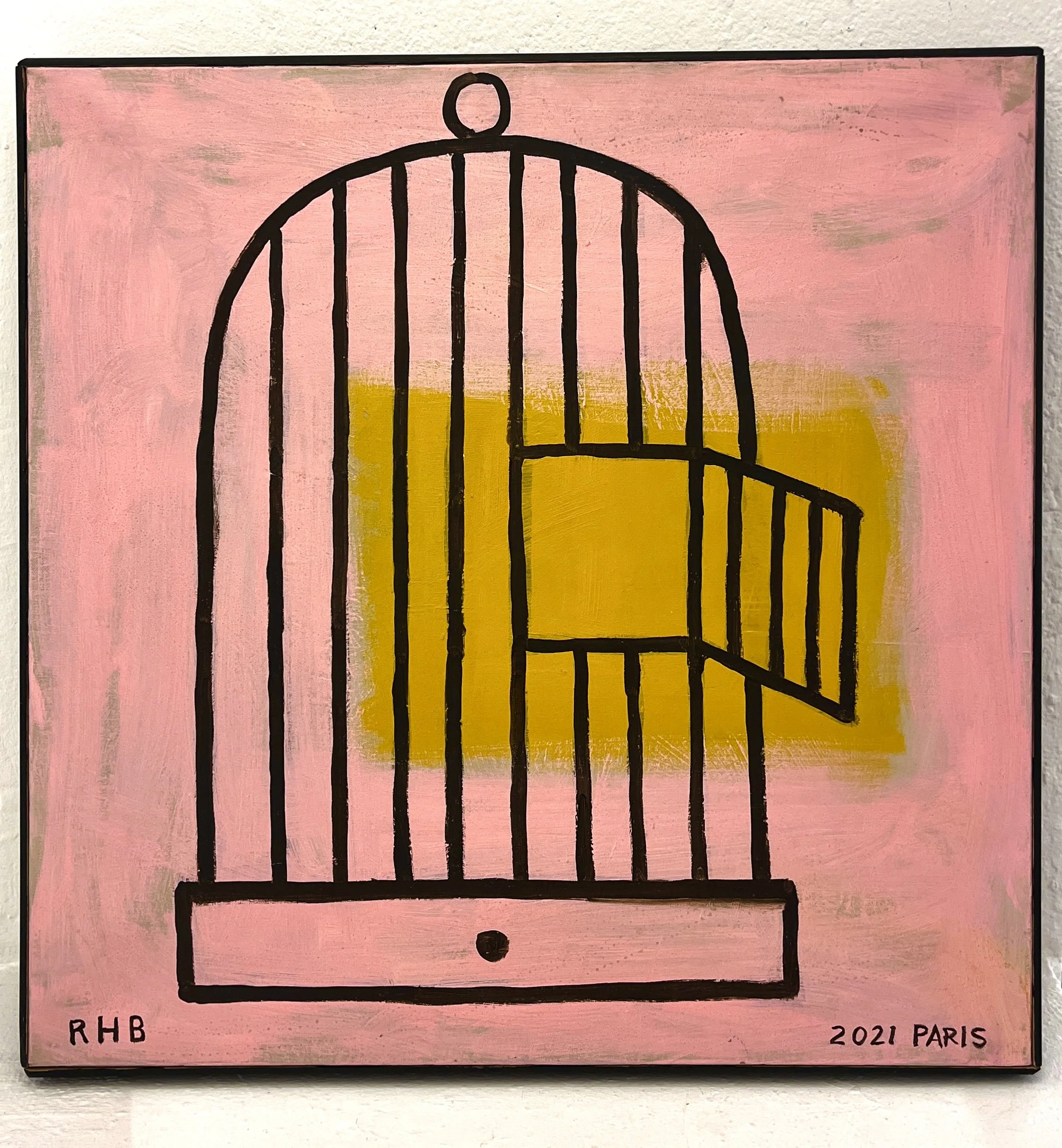
The Bird Cage
I’m now standing in a place where I have a real audience reading my work — and some of these people are rather famous, important, accomplished.
Well, they’re all important, of course.
These days I am living right now are not quite the payout times. This is not when the checks get cashed, the reservations are made, the clothes are purchased, and the rewards of a long creative pilgrimage finally begin to unfold — but it’s damn close.
I find myself in an exceedingly powerful position because these are the days of the creative. The ones who excelled in school by following rules, doing their homework, and extra credit — they are becoming the dinosaurs, stuck in the tar pits of fear, worrying about AI taking over. They lament smartphone addiction and the fact that kids don’t build treehouses anymore, missing that these kids are busy designing apps with AI, becoming the next multimillionaires, while the plastic bins of Legos gather dust.
The future doesn’t belong to those who cling to what was.
It belongs to the ones who can imagine something that doesn’t exist yet — and have the nerve to build it.
That’s what artists have always done.
We don’t wait for permission.
We don’t wait for the map.
We make the map.
I’ve learned how to die and be reborn while still alive. I’ve lived multiple lives in this same body. I am a ninja pivoter — beyond resilient, unsinkable, a shape-shifter. I will thrive in this new world because I was made for it.
Legos weren't my generation. I can still hear the sound of my son raking through his plastic bin looking for that right piece. I loved knowing he was doing something that connected his hands with his brain. That’s a good memory but I’ve lived enough lives to know the world is built and rebuilt by those willing to imagine something new.

Love Letters From Paris: Morning Pages
Artist and writer Richard Beerhorst shares his morning writing ritual from Paris, inspired by Julia Cameron and Neale Donald Walsch. A meditation on creativity, journaling, and the quiet holiness that begins each day with a Bic pen and a blank page.

Morning Pages before dawn is how every new day begins on Boulevard Voltaire
When my Bic pen touches the paper in the morning, I have the sense of turning something on. It feels like a signal—an invisible bell summoning my unseen companions to come closer and lean in. This is my holy of holies, my personal sacred space. The blank white page before me is my life, waiting to be dreamed into existence.
I can’t quite remember when I began doing this regularly, but it must be over twenty years now. I first encountered the idea in The Artist’s Way by Julia Cameron, a book that speaks to the basic properties of creativity and how to protect this fragile, essential quality in one’s life. The world we currently occupy doesn’t exactly encourage the “artist’s way,” to say the least. In her groundbreaking book, Julia encourages the reader to write three pages of anything first thing in the morning.
This does at least two very important things. First, it’s a simple way of declaring, at the start of the day, that you are first and foremost a creator. Second, it’s a way of clearing the pipes—of letting the inner waters run free. When I was a boy growing up in the suburbs, we learned to let the garden hose run for a while before taking a drink. The first rush of water was warm, tasting of rubber. But if you waited, the flow soon turned cool and fresh. Writing morning pages is like that: letting the water run awhile.
It doesn’t matter so much what you write, only that you write. If you get stuck at the beginning, you can simply repeat a few sentences over and over. Eventually, the words, the sentences, and the ideas will begin to come.
For me, I like to write down my visions and hopes for the future as if they’ve already manifested. This enriches my imagination and draws my desired life into form. Sometimes I let my future self step through—offering words of wisdom and gentle encouragement from a higher mind. There are even mornings when my future self will ask what I would tell the version of me who was slugging it out ten years ago.
Another book that has shaped my morning writing is Conversations with God by Neale Donald Walsch. In it, Walsch describes a time when he was lost and discouraged. He began writing a letter to God, filled with complaints and questions, and was astonished to find words answering him—clear, loving, and wiser than his own thoughts. That spontaneous exchange became a dialogue with divine intelligence, eventually published in three books that have helped millions move beyond the stale image of an old man in the sky and toward a living, breathing relationship with the sacred.
Each morning I sit down in the dark, pre-dawn—it feels like the earth before God created the animals and the first pair of humans, or perhaps the hour before the Big Bang itself.
The pen meets the page, and something unseen stirs.
Paris listens.
My hand moves.
And the day, once again, becomes holy.
Explore more:
– Letters from Paris Archive
– About Richard Beerhorst
– Recent Paintings

Letter from Paris: The Bear in Exile
My dear,
This afternoon I write to you with the steady hum of traffic rising from five floors below on Boulevard Voltaire. On the table before me rests a cast-iron bear I unearthed from the back of Vero’s closet, its weight startling me like a relic that had been waiting.
My name, Beerhorst—“bear’s forest”—has always carried its own myth. The bear alone in his cave, breathing through the long winter, hidden yet alive. I feel the truth of that image in my bones now.
I came to Paris from Mallorca in the spring with hope burning quietly in my chest
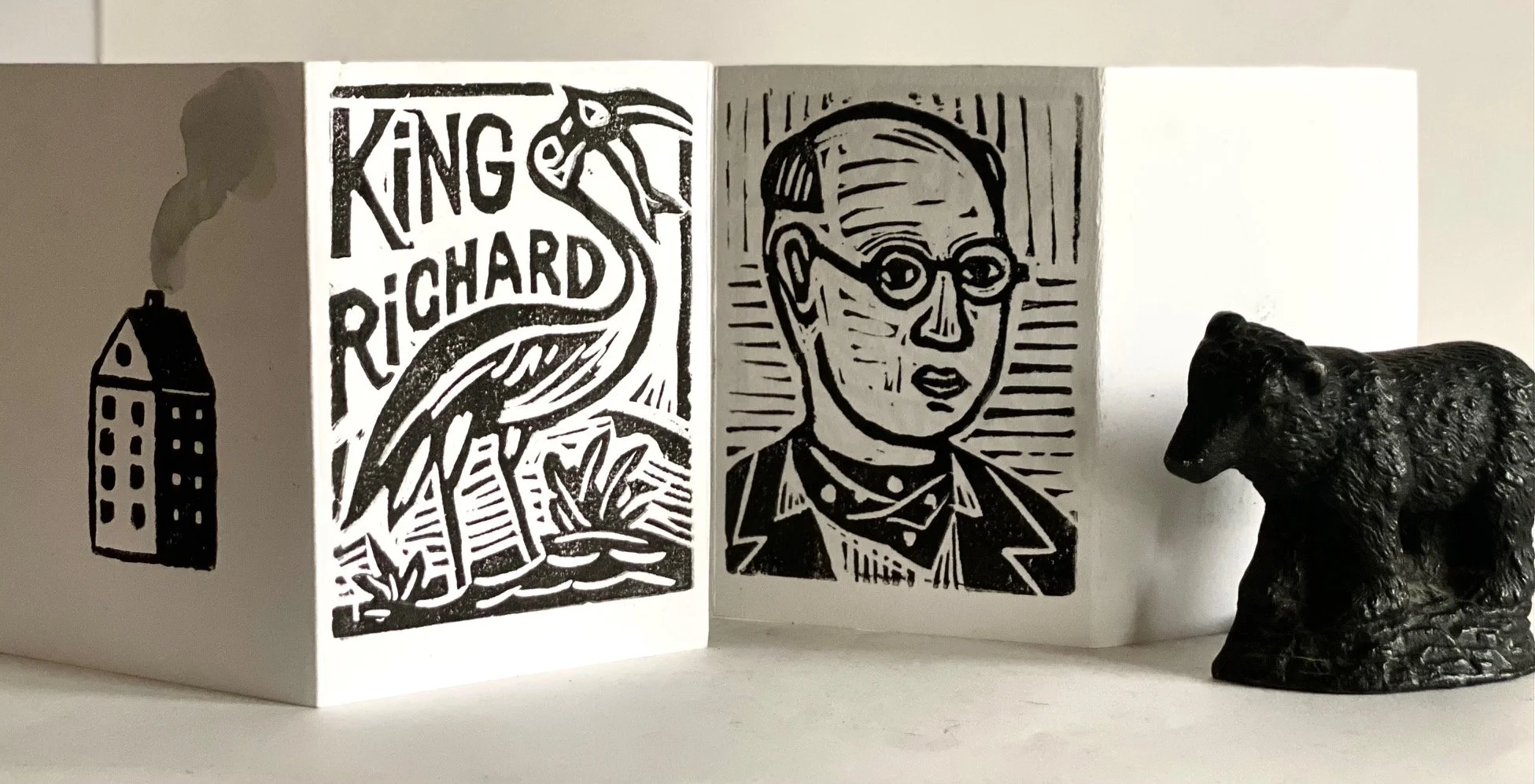
A Flame Circle card ready to be written to a new subscriber
My dear,
This afternoon I write to you with the steady hum of traffic rising from five floors below on Boulevard Voltaire. On the table before me rests a cast-iron bear I unearthed from the back of Vero’s closet, its weight startling me like a relic that had been waiting.
My name, Beerhorst—“bear’s forest”—has always carried its own myth. The bear alone in his cave, breathing through the long winter, hidden yet alive. I feel the truth of that image in my bones now.
I came to Paris from Mallorca in the spring with hope burning quietly in my chest, ready for my second solo exhibition—this time with the El Habibi Galerie. But the opening passed without a single sale. Month after month my account drained while the paintings leaned against walls in silence, like mute companions.
Then came the night of rupture—dragged into the street half-naked and bloodied, stripped of safety and certainty. Since then I have slept on a friend’s couch, my small thirty-by-thirty canvases stacked in the corner of her storage room, an orchard of fruit still waiting for its harvest.
And yet, even in this exile, myth comes close. I think of David—anointed but driven into caves, hunted by Saul, kept alive by the wilderness. His story whispers that I, too, am not only displaced but prepared. That exile is not the end but the apprenticeship of kingship. That the cave is not only a refuge but a forge.
This is what myth does—it presses depth into our days when the surface would otherwise swallow us. It tells us the bear is not only an animal but a mirror, the bloodied man in the street not only broken but becoming. In a world dazzled by surfaces, myth reminds us of the subterranean currents shaping our lives. It turns our ache into an anvil, our wandering into initiation.
Even here, especially here, I trust I am still being shaped for more than I can yet imagine.
Yours,
Rick
Check out the Thirty by Thirty series — my alchemical passage from blood bath to artistic rebirth.

Letters From Paris: On Self Portraits
Dear friends,
I have made countless self-portraits over the years—drawings, block prints, paintings. In this, I follow a lineage I admire deeply: Rembrandt, Van Gogh, Frida Kahlo, and Howard Finster. Each of them stood before the mirror and took a long, unflinching look at themselves. That takes courage.
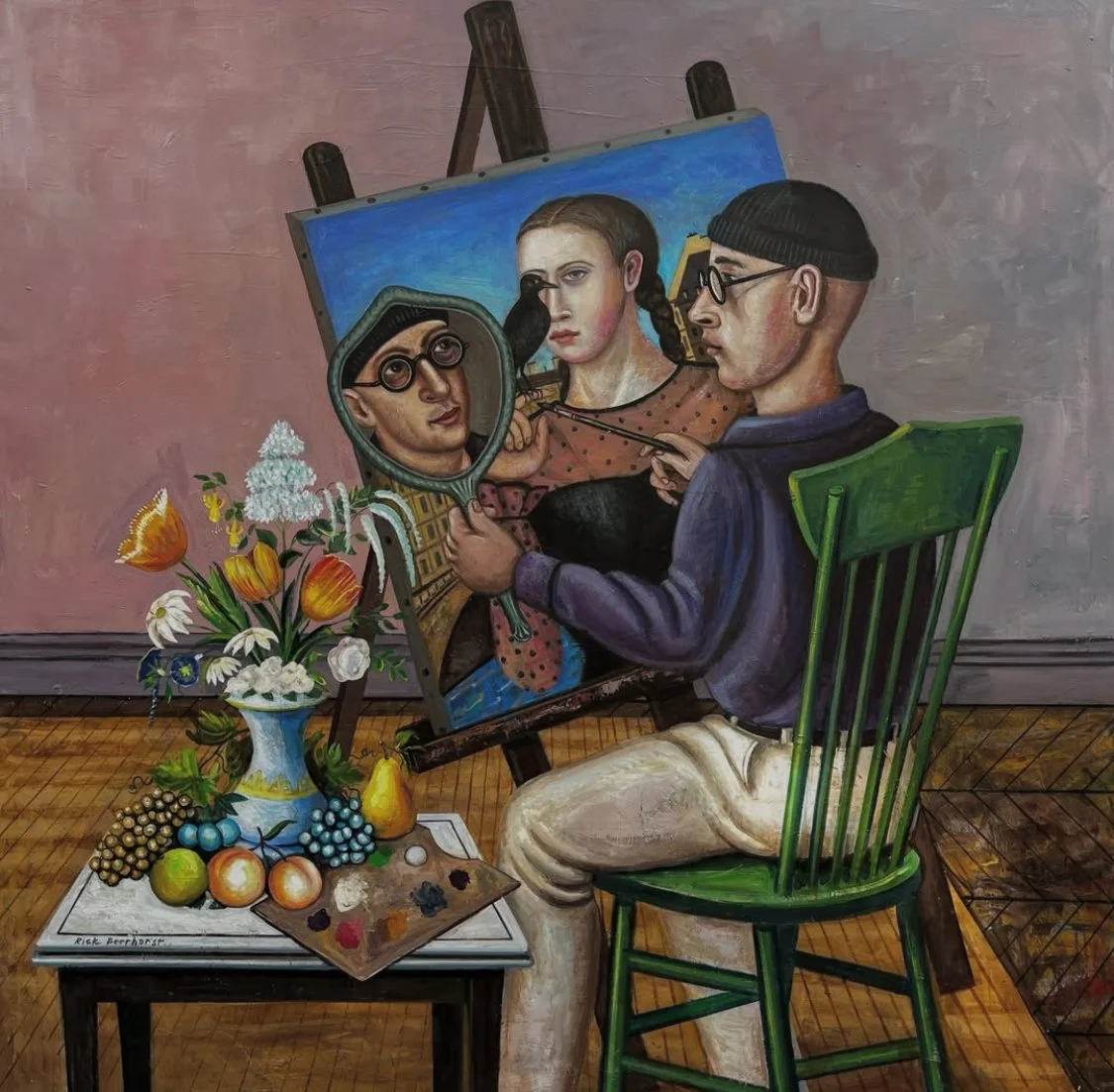
Self Portraits, 156 × 156 cm, 2021-23
Joe Dispenza often reminds us that where we put our attention is where we send our power. If this is true, perhaps these artists were not only observing themselves, but empowering themselves in the very act of painting their own image.
I know this has been true for me. When I face the mirror, I ask: Am I still on track? Am I following the arc of my own story, or have I drifted into old programs from my youth?
This unblinking gaze was what enabled Frida to alchemize her relentless pain into art; what drew Rembrandt deeper into the magical chiaroscuro of his shadows; what kept Vincent working in obscurity, ignored by the art world of his time. It even lifted Howard from being a dirt-poor Baptist preacher to standing on the stage of The David Letterman Show.

Self Portrait (lost painting) 2024
I’m always a little surprised when someone purchases one of my self-portraits. They feel so personal—more like a journal entry than a public statement. But perhaps that is their charm. They are raw, terrifyingly personal, and therefore alive in a way other pieces never can be.
Maybe that’s why people choose to live with them—because in the end, the courage to see oneself clearly is something we all long for.
If this letter resonated, you can stand closer to the work through the Flame Circle