A creative life throws things away because it trusts continuity
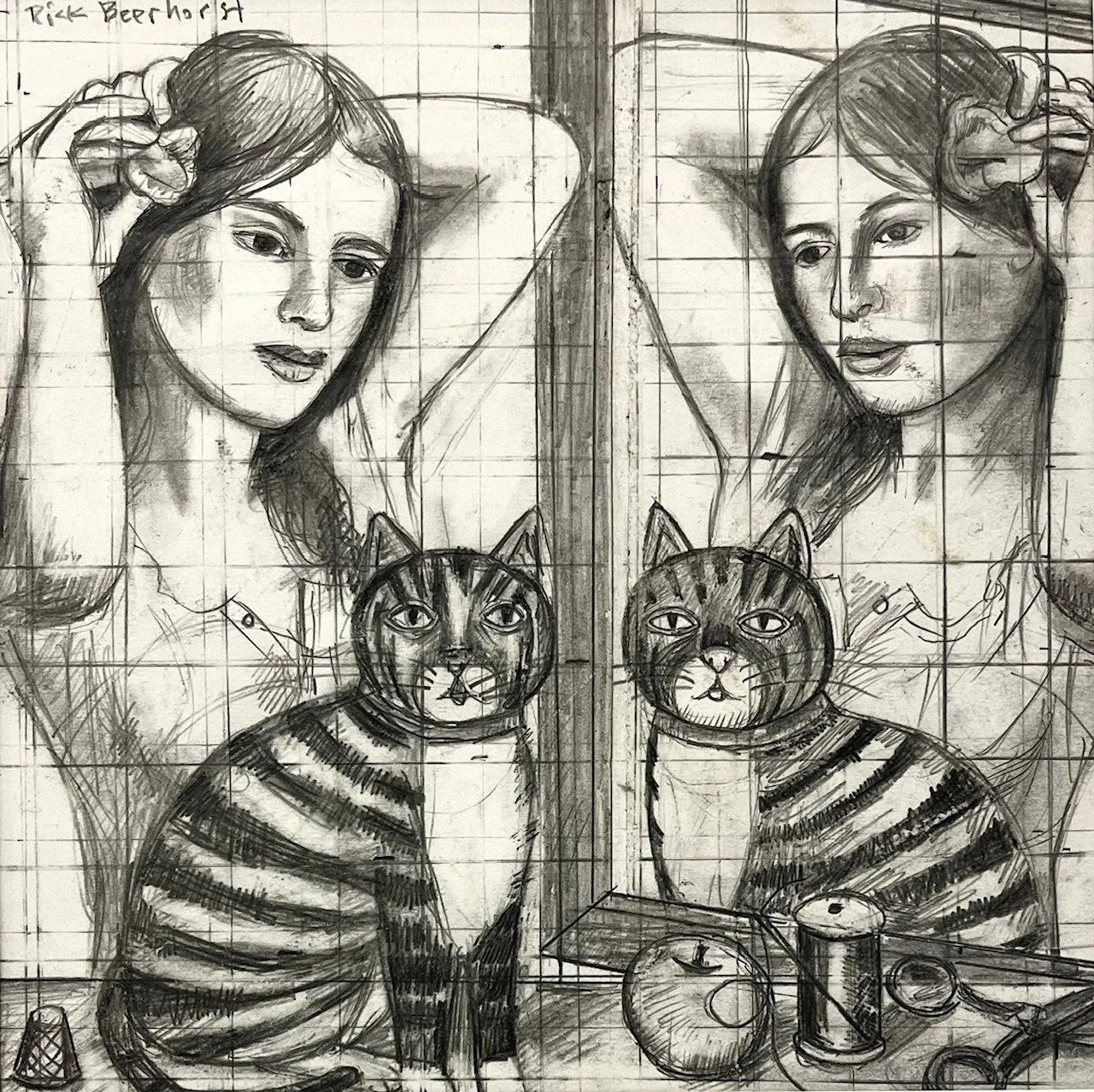
Every morning beginning somewhere between 5:00 and 6:00 a.m. I sit down with a Bic pen and a blank notebook from the grocery store and write.
I don’t hesitate.
I don’t warm up.
I don’t try to sound intelligent, insightful, or worth saving.
I just write.
Much of what comes out is repetitive. The same thoughts circling. The same questions knocking on the same door. If I were to reread it later, most of it would be boring, even to me. That’s not a flaw. That’s the function.
That hour isn’t for producing anything.
It’s for clearing something.
I’m not composing essays. I’m letting the mind run out of its rehearsed material. I’m loosening sediment. Meaning doesn’t arrive as brilliance. It arrives after insistence burns itself out.
When the notebook is full, I throw it away.
No archiving.
No rereading.
No saving it “just in case.”
People are often shocked by this. They imagine waste or loss. For me it feels like completion. The notebook was never an artifact. It was a vessel. Once it’s done its work, keeping it would only harden what was meant to move.
That act of discarding is what makes the writing honest. The moment a future reader enters the room, the body tightens. But when I know the pages will be recycled, the pen moves freely. Nothing has to prove itself. Nothing has to survive.
And something essential always does.
Out of that unremarkable, disposable hour come the essays that later feel precise. The handwritten letters that land with warmth. The small, exact comments that say what needs to be said. The conversations that leave people lighter when I walk out the door.
The value was never on the page.
It was in what was dislodged.
There’s a line in the Psalms that reads, “Teach us to number our days, that we may gain a heart of wisdom.”
Not fear our days.
Not rush them.
Number them.
Countability, not anxiety.
And in Ecclesiastes there’s that unsentimental inventory of decline: the silver cord snapping, the golden bowl breaking, the wheel at the well finally giving way. It isn’t moralistic. It’s mechanical. The body is named for what it is: a finely tuned, temporary instrument. When it breaks, the music stops here and resumes elsewhere.
Paper understands this. So does soil.
Throwing a notebook into the recycling bin is a small rehearsal for a larger truth: nothing is meant to be hoarded forever. Not words. Not seasons. Not bodies. Nothing is wasted when it’s allowed to return.
This awareness doesn’t make me careless with my health. Quite the opposite. I take care of the instrument because it matters, not because it’s permanent. Stewardship replaces superstition. Vitality without denial.
There’s another layer to this practice that matters just as much.
When I begin my day with a creative act that contains no performance and no extraction, no ulterior motive and no hoped-for payoff, I set a precedent for everything that follows. It greases the pole. It primes the pump. It loosens the chaff from the grain.
The day inherits that ethic.
Work unfolds with less drag. Conversations move without strain. I can barely remember the last creative block I had to drag myself over, because I’m no longer beginning the day already in debt to an outcome.
Writing with gusto, passion, and honesty, then tossing the result away, is an antidote to a culture bunkered down in survival mode. A world where time is money, where you’re already late to a meeting you know will be boring and unnecessary, where every action is quietly auditioning for relevance.
Survival mode hoards.
Creative life circulates.
A creative life lets things—and people—go because it trusts continuity. It trusts that what matters will migrate outward into lived presence before the paper, and eventually the body, returns to earth.
I don’t save notebooks.
I become what they taught me.
And then I let them go.